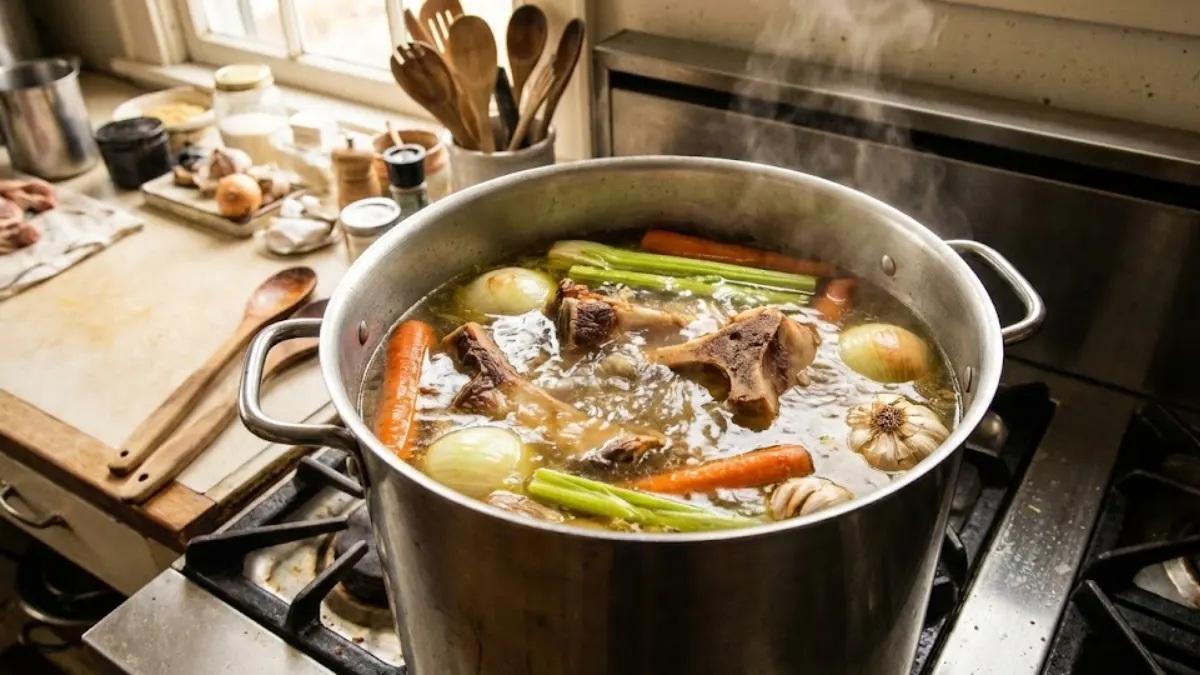
Ingredients
Equipment
Method
- Blanch the Bones (Optional but Recommended): Place bones in a large stockpot and cover with cold water. Bring to a boil and cook for 10–15 minutes. Drain and rinse bones thoroughly to remove impurities. This results in a cleaner, clearer bone broth.
- Roast the Bones (Flavor Boost – Optional): Preheat oven to 425°F (220°C). Spread bones and vegetables on a baking sheet and roast for 35–45 minutes, turning once, until deeply browned. This step adds rich depth and color to the bone broth recipe.
- Add Ingredients to the Pot: Transfer bones and roasted vegetables to a large stockpot or slow cooker. Add garlic, bay leaves, peppercorns, and apple cider vinegar. Cover completely with filtered water.
- Slow Simmer: Bring to a gentle boil, then reduce heat to low. Simmer uncovered or partially covered for 12–24 hours, skimming foam occasionally. The longer it simmers, the more collagen and nutrients are extracted.
- Strain the Broth: Remove from heat and strain through a fine-mesh strainer or cheesecloth. Discard solids.
- Cool and Store: Let broth cool, then refrigerate. Once chilled, remove hardened fat from the top if desired. Store in airtight containers.
Notes
- This bone broth recipe works best when using a mix of marrow bones and joint bones (knuckle, oxtail, feet). The combination provides rich flavor and high collagen content.
- Low and slow simmering is essential. Keep the broth at a gentle simmer not a rolling boil to avoid cloudiness and to properly extract nutrients.
- Adding apple cider vinegar helps draw minerals and collagen from the bones, but the vinegar taste disappears during long cooking.
- Do not add salt while cooking. Season after straining, so you can control sodium levels and use the broth for multiple dishes.
- A properly made bone broth will gel when refrigerated. This is a natural sign of collagen extraction and does not affect reheating or flavor.
- Skimming foam from the surface during the first 1–2 hours helps keep the bone broth clean and clear.
- For a clearer broth, strain through a fine-mesh strainer or cheesecloth after cooking.
- The fat that solidifies on top after chilling can be removed or saved — it adds flavor when used for cooking.
- Bone broth can be enjoyed as a warm drink or used as a base for soups, stews, sauces, grains, and rice dishes.
- Storage tip: Refrigerate bone broth for up to 5–6 days or freeze for up to 6 months in portioned containers.
